
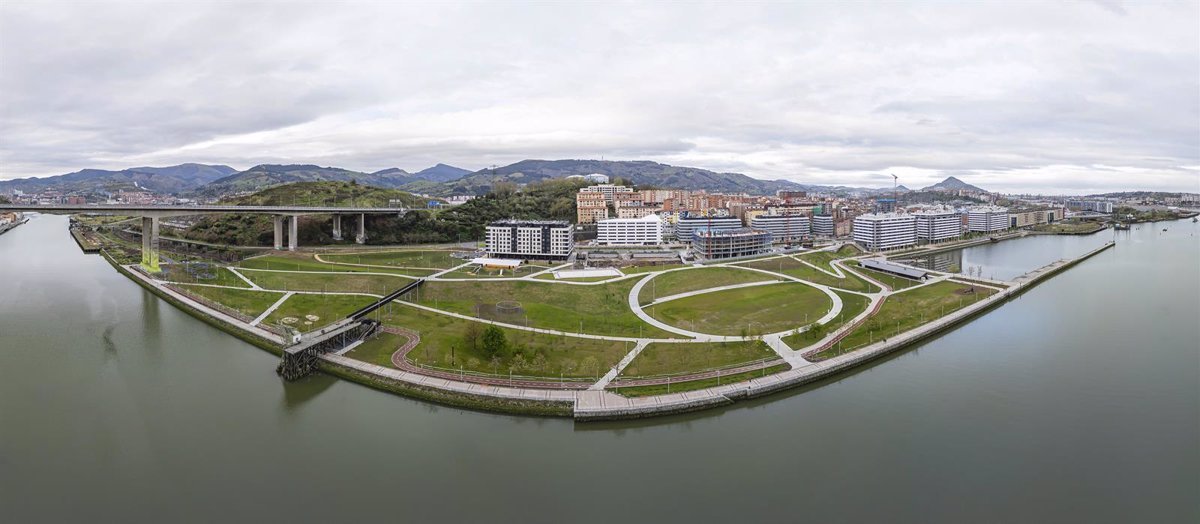
Bilbao Ría 2000 and the City Council of Barakaldo (Bizkaia) have organized various cultural and leisure activities for this weekend, April 5 and 6, and the following weekend, April 12 and 13, to introduce the new Zamalanda Park to the residents of the industrial town and the region, following its opening this past Monday.
Zamalanda-Ría Park has allowed the recovery of the former industrial lands where Altos Hornos de Vizcaya was located, after a regeneration project carried out by Bilbao Ría 2000, involving an investment of over 7 million euros.
During the next two weekends, there will be theatrical guided tours by an actor and actress dressed as characters from the industrial era, canoe circuits, skating sessions, an outdoor play area designed to promote outdoor play, artisanal and inclusive wooden games, pump truck and skateboarding workshops, Herri Kirolak, akroyoga, and urban dance workshops with live demonstrations, a txalaparta workshop, and a family-oriented disco party, among other activities.
Additionally, the Barakaldo Municipal Band will perform this Sunday, April 6, from 12:30 to 13:30 next to the multi-purpose pavilion, as reported by the city council.
Zamalanda-Ría Park, occupying 85,000 square meters of former industrial land, covers the Adif railway line, leading to two large terraces connected by a network of paths, walks, and stairs.
This new space combines landscaped areas, outdoor activity zones with a pump track and a skating rink, a large plaza designed for various uses and also serving as a stage thanks to an amphitheater, and pathways for biking, walking, or rollerblading along a bidegorri that runs parallel to the riverbank, next to the recently renovated pedestrian promenade, in addition to terraces, river-facing viewpoints, an urban beach, and natural meadows.
The project includes a footbridge linking Altos Hornos Avenue to the former mineral loading dock of the Franco-Belga Company, as well as a multi-purpose pavilion with an industrial-style wooden structure, next to the Portu dock.
In front of the pavilion, there are stands above the water surface and a floating pontoon that allows access to the water and the development of water activities.
Furthermore, the industrial heritage of the area is complemented by various informative landmarks recalling the activities and uses of those lands, along with the installation of Magdalena Abakanowicz’s sculpture «Dancing Figures.»
Acerca del autor


